JavaScript 中的链表
篇幅较长,文章目录:
啥是链表?
链表是为了解决数组问题而发明出来的,它提升了插入、删除效率,而牺牲了查找效率。 链表的插入、删除效率是 O(1),因为只要将对应位置元素断链、重连就可以完成插入、删除,而无需关心其他节点。 相应的查找效率就低了,因为存储空间不是连续的,所以无法像数组一样通过下标直接查找,而需要通过指针不断搜索,所以查找效率为 O(n)。
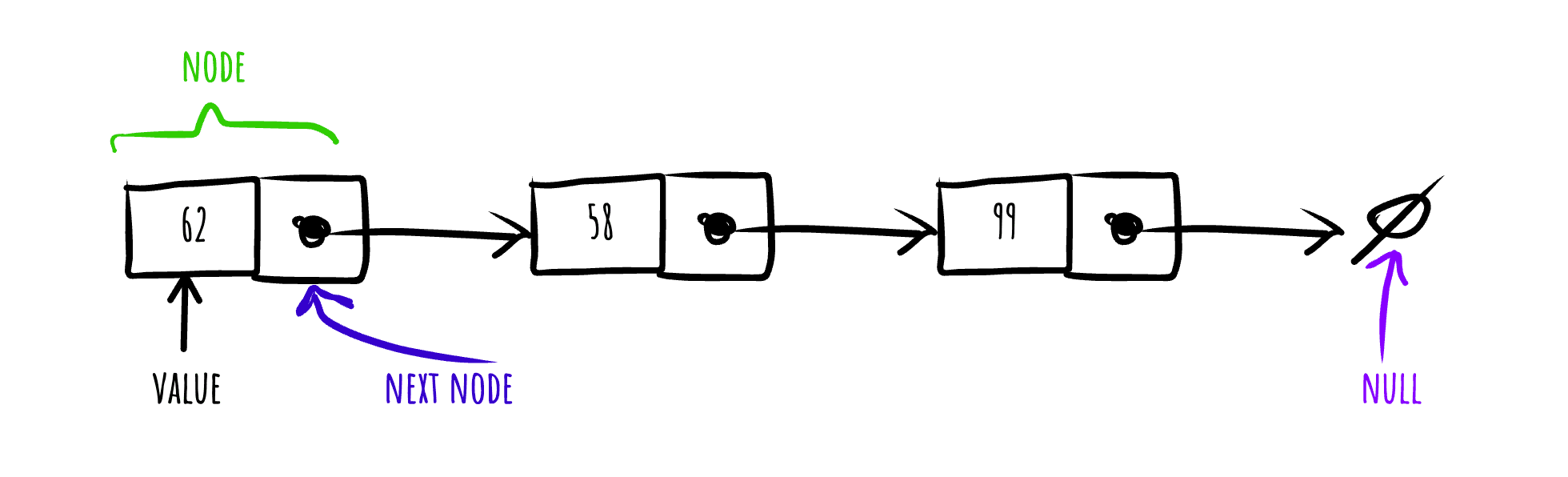
链表最常用的就是单向链表,其结构如下图所示:
除此之外还有 双向链表、循环链表。
单向链表
单向链表就是只能沿着链表头往下寻找,我们可以用 Node 表示链表中的单个节点,有两个属性 value next。
class Node {
  constructor(value) {
    this.value = value;
    this.next = null;
  }
}

const n1 = new Node(1);
const n2 = new Node(2);
n1.next = n2;

console.log(n1);
// Node { value: 1, next: Node { value: 2, next: null } }
把这些单个的 Node 整合起来就是链表,接下来看看链表的实现:
class Node {
  constructor(value) {
    this.value = value;
    this.next = null;
  }
}

class LinkedList {
  static isNode(value) {
    return value instanceof Node;
  }

  /**
   * @returns {Node | null}
   */
  static createNode(value) {
    return value === null ? null : LinkedList.isNode(value) ? value : new Node(value);
  }

  #length = 0;
  #head = null;
  #tail = null;

  constructor(value = null) {
    const nodeValue = LinkedList.createNode(value);
    this.#head = nodeValue;
    this.#tail = nodeValue;
    this.#lengthIncrements(nodeValue);
  }

  #lengthIncrements(value) {
    if(LinkedList.isNode(value)) {
      this.#length++;
    }
  }
  get size() {
    return this.#length;
  }
  get tail() {
    return this.#tail;
  }
  get head() {
    return this.#head;
  }
}

const l1 = new LinkedList();
const l2 = new LinkedList(2);
console.dir(l1.head); // null
console.dir(l2.head); // Node { value: 2, next: null }
这只是链表结构的实现(我们现在可以 new 它了), 并且可以通过 getter (31-39) 访问链表的首尾以及长度。
接下来梳理一下链表的功能,实现链表的操作:
- 尾插入
- 指定位置插入
- 尾移除
- 指定位置移除
- 链表转数组
- 数组转链表
- 查找
- 遍历
尾插入
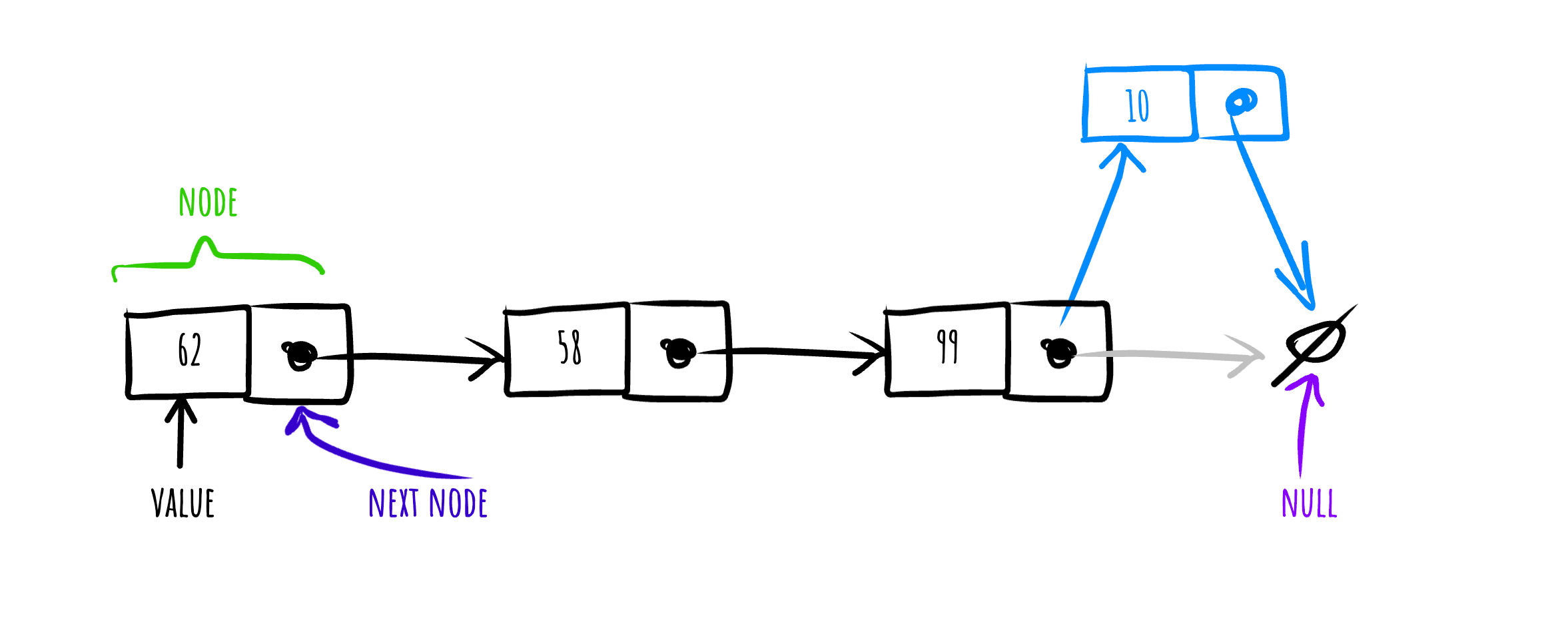
类似数组的 push 操作,即在链表结尾加入一个新的节点,并使 tail 指针指向它。
图示:
看看代码实现:
class LinkedList {
  static isNode(value) {
    return value instanceof Node;
  }

  /**
   * @returns {Node | null}
   */
  static createNode(value) {
    return value === null
      ? null
      : LinkedList.isNode(value)
      ? value
      : new Node(value);
  }

  #length = 0;
  #head = null;
  #tail = null;

  constructor(value = null) {
    const nodeValue = LinkedList.createNode(value);
    this.#head = nodeValue;
    this.#tail = nodeValue;
    this.#lengthIncrements(nodeValue);
  }

  append(value) {
    const nodeValue = LinkedList.createNode(value);
    if (this.#length === 0) {
      this.#head = nodeValue;
    } else {
      this.#tail.next = nodeValue;
    }
    this.#tail = nodeValue;
    this.#lengthIncrements(nodeValue);

    return this;
  }

  #lengthIncrements(value) {
    if (LinkedList.isNode(value)) {
      this.#length++;
    }
  }
  get size() {
    return this.#length;
  }
  get tail() {
    return this.#tail;
  }
  get head() {
    return this.#head;
  }
}
指定位置插入
可还记得文章一开始给出的链表结构?
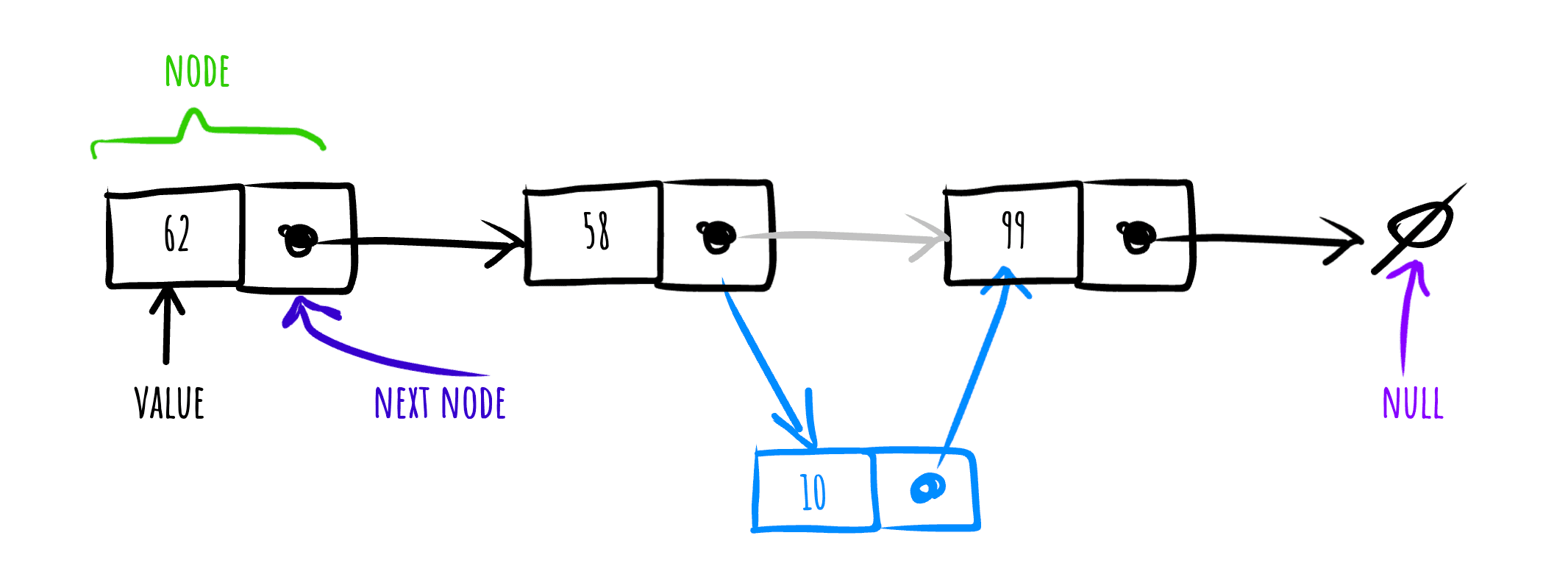
现在有个 { value: 10 } 节点(我们称为插入节点)要插入到 { value: 58 }(我们称为目标节点) 的后面, 我们只需要把目标节点的 next 指针指向插入节点(断链),然后把插入节点的 next 指针指向目标节点之前 next 指针指向的节点(重连)就可以啦。
图示:
看看代码实现:
代码过长不利于阅读,这里把之前实现的操作删掉了。
class LinkedList {
  static isNode(value) {
    return value instanceof Node;
  }

  /**
   * @returns {Node | null}
   */
  static createNode(value) {
    return value === null
      ? null
      : LinkedList.isNode(value)
      ? value
      : new Node(value);
  }

  #length = 0;
  #head = null;
  #tail = null;

  constructor(value = null) {
    this.#emptyAppend(value);
  }

  // 其他操作...

  // 插入到首位
  unshift(value) {
    if (this.#length === 0) {
      return this.#emptyAppend(value);
    }
    const nodeValue = LinkedList.createNode(value);
    nodeValue.next = this.#head;
    this.#head = nodeValue;
    this.#lengthIncrements(nodeValue);

    return this;
  }

  insertAt(value, index) {
    if (this.#length === 0) {
      return this.#emptyAppend(value);
    }
    // index 没传或者为0,插入首位
    if(!index || index === 0 || index === 1) {
      return this.unshift(value);
    }
    // index > 链表长度,直接append
    if(index > this.#length) {
      return this.append(value);
    }

    const nodeValue = LinkedList.createNode(value);
    let currentNode = this.#head;
    let currentIndex = 1;
    // 遍历链表,找到插入的位置
    while(currentIndex < index -1 && currentNode) {
      currentNode = currentNode.next;
      currentIndex++;
    }
    if(currentNode) {
      // 操作链表
      const beforeNextNode = currentNode.next;
      // 断链
      currentNode.next = nodeValue;
      // 重连
      nodeValue.next = beforeNextNode;
      this.#lengthIncrements(nodeValue);
    }

    return this;
  }

  #lengthIncrements(value) {
    if (LinkedList.isNode(value)) {
      this.#length++;
    }
  }

  #emptyAppend(value) {
    const nodeValue = LinkedList.createNode(value);
    this.#head = nodeValue;
    this.#tail = nodeValue;
    this.#lengthIncrements(nodeValue);
    return this;
  }

  get size() {
    return this.#length;
  }
  get tail() {
    return this.#tail;
  }
  get head() {
    return this.#head;
  }
}
除了实现 insertAt 之外,还实现了 插入到链表首位 的功能,可见 unshift 方法(第一块高亮区域)。 另外封装了 emptyAppend 方法(第三块高亮区域),当链表为空时,直接调用这个方法。
尾移除
尾移除其实就是把链表的最后一项 pop 掉。
步骤就是,利用 while 循环找到链表的倒数第二项(即 node.next 存在),然后将令 tail 指针指向 node,并把 node.next = null。 在这之前考虑两个边界情况:
- 当前链表为空,进行处理。如果你希望你的链表比较严格,你可以在
pop时throw一个error;如果希望宽松一点,可以不做操作。 - 当前链表只有一条数据,直接将
head指针 和tail指针指向null,并使length--。
和插入操作不同,用户进行 pop 操作,希望拿到 pop 出来的那个值。所以不能再 return this。
下面 绿色高亮 为实现的代码。
class Node {
  constructor(value) {
    this.value = value;
    this.next = null;
  }
}

class LinkedList {
  static isNode(value) {
    return value instanceof Node;
  }

  /**
   * @returns {Node | null}
   */
  static createNode(value) {
    return value === null
      ? null
      : LinkedList.isNode(value)
      ? value
      : new Node(value);
  }

  #length = 0;
  #head = null;
  #tail = null;

  constructor(value = null) {
    this.#emptyAppend(value);
  }

  append(value) {
    const nodeValue = LinkedList.createNode(value);
    if (this.#length === 0) {
      return this.#emptyAppend(nodeValue);
    }

    this.#tail.next = nodeValue;
    this.#tail = nodeValue;
    this.#lengthIncrements(nodeValue);

    return this;
  }

  unshift(value) {
    if (this.#length === 0) {
      return this.#emptyAppend(value);
    }
    const nodeValue = LinkedList.createNode(value);
    nodeValue.next = this.#head;
    this.#head = nodeValue;
    this.#lengthIncrements(nodeValue);

    return this;
  }

  insertAt(value, index) {
    if (this.#length === 0) {
      return this.#emptyAppend(value);
    }
    // index 没传或者为0,插入首位
    if (!index || index === 0 || index === 1) {
      return this.unshift(value);
    }
    // index > 链表长度,直接append
    if (index > this.#length) {
      return this.append(value);
    }

    const nodeValue = LinkedList.createNode(value);
    let currentNode = this.#head;
    let currentIndex = 1;
    while (currentIndex < index - 1 && currentNode) {
      currentNode = currentNode.next;
      currentIndex++;
    }
    if (currentNode) {
      const beforeNextNode = currentNode.next;
      currentNode.next = nodeValue;
      nodeValue.next = beforeNextNode;
      this.#lengthIncrements(nodeValue);
    }

    return this;
  }

+  pop() {
+    if (this.#length <= 0) {
+      return null;
+    }
+
+    const lastItem = this.#tail;
+    if (this.#length === 1) {
+      this.#head = null;
+      this.#tail = null;
+      this.#length--;
+
+      return lastItem;
+    }
+
+    let lastItemParent = this.#head;
+    while (lastItemParent?.next?.next) {
+      lastItemParent = lastItemParent.next;
+    }
+    lastItemParent.next = null;
+    this.#tail = lastItemParent;
+    this.#length--;
+
+    return lastItem;
+  }

  #lengthIncrements(value) {
    if (LinkedList.isNode(value)) {
      this.#length++;
    }
  }

  #emptyAppend(value) {
    const nodeValue = LinkedList.createNode(value);
    this.#head = nodeValue;
    this.#tail = nodeValue;
    this.#lengthIncrements(nodeValue);
    return this;
  }

  get size() {
    return this.#length;
  }
  get tail() {
    return this.#tail;
  }
  get head() {
    return this.#head;
  }
}
遍历链表
对于数组我们可以很方便的通过 for、for of 语法遍历,但对于链表我们只能用 while 循环,通过 next 指针向下寻找。 其实我们可以通过 JavaScript 的 Iterator 让我们的链表也可以通过 for of 遍历,接下来实现一个 each 方法,我们调用这个方法,就可以遍历链表。
each 的实现很简单,核心是通过 Generator Function,还是下面代码的绿色高亮部分:
class Node {
  constructor(value) {
    this.value = value;
    this.next = null;
  }
}

class LinkedList {
  static isNode(value) {
    return value instanceof Node;
  }

  /**
   * @returns {Node | null}
   */
  static createNode(value) {
    return value === null
      ? null
      : LinkedList.isNode(value)
      ? value
      : new Node(value);
  }

  #length = 0;
  #head = null;
  #tail = null;

  constructor(value = null) {
    this.#emptyAppend(value);
  }

  append(value) {
    const nodeValue = LinkedList.createNode(value);
    if (this.#length === 0) {
      return this.#emptyAppend(nodeValue);
    }

    this.#tail.next = nodeValue;
    this.#tail = nodeValue;
    this.#lengthIncrements(nodeValue);

    return this;
  }

  unshift(value) {
    if (this.#length === 0) {
      return this.#emptyAppend(value);
    }
    const nodeValue = LinkedList.createNode(value);
    nodeValue.next = this.#head;
    this.#head = nodeValue;
    this.#lengthIncrements(nodeValue);

    return this;
  }

  insertAt(value, index) {
    if (this.#length === 0) {
      return this.#emptyAppend(value);
    }
    // index 没传或者为0,插入首位
    if (!index || index === 0 || index === 1) {
      return this.unshift(value);
    }
    // index > 链表长度,直接append
    if (index > this.#length) {
      return this.append(value);
    }

    const nodeValue = LinkedList.createNode(value);
    let currentNode = this.#head;
    let currentIndex = 1;
    while (currentIndex < index - 1 && currentNode) {
      currentNode = currentNode.next;
      currentIndex++;
    }
    if (currentNode) {
      const beforeNextNode = currentNode.next;
      currentNode.next = nodeValue;
      nodeValue.next = beforeNextNode;
      this.#lengthIncrements(nodeValue);
    }

    return this;
  }

  pop() {
    if (this.#length <= 0) {
      return null;
    }
    const lastItem = this.#tail;

    if (this.#length === 1) {
      this.#head = null;
      this.#tail = null;
      this.#length--;

      return lastItem;
    }
    let lastItemParent = this.#head;
    while (lastItemParent?.next?.next) {
      lastItemParent = lastItemParent.next;
    }
    lastItemParent.next = null;
    this.#tail = lastItemParent;
    this.#length--;

    return lastItem;
  }

+  *each() {
+    let current = this.#head
+    while(current.next) {
+      yield current
+      current = current.next
+    }
+    // while 退出时,只是 next 指针空了,当前 current 还是有值的,再 yield 一次
+    yield current
+  }

  #lengthIncrements(value) {
    if (LinkedList.isNode(value)) {
      this.#length++;
    }
  }

  #emptyAppend(value) {
    const nodeValue = LinkedList.createNode(value);
    this.#head = nodeValue;
    this.#tail = nodeValue;
    this.#lengthIncrements(nodeValue);
    return this;
  }

  get size() {
    return this.#length;
  }
  get tail() {
    return this.#tail;
  }
  get head() {
    return this.#head;
  }
}
链表转数组
借用 *each 方法,转数组更简单了🤦🏻。
class Node {
  constructor(value) {
    this.value = value;
    this.next = null;
  }
}

class LinkedList {
  static isNode(value) {
    return value instanceof Node;
  }

  /**
   * @returns {Node | null}
   */
  static createNode(value) {
    return value === null
      ? null
      : LinkedList.isNode(value)
      ? value
      : new Node(value);
  }

  #length = 0;
  #head = null;
  #tail = null;

  constructor(value = null) {
    this.#emptyAppend(value);
  }

  append(value) {
    const nodeValue = LinkedList.createNode(value);
    if (this.#length === 0) {
      return this.#emptyAppend(nodeValue);
    }

    this.#tail.next = nodeValue;
    this.#tail = nodeValue;
    this.#lengthIncrements(nodeValue);

    return this;
  }

  unshift(value) {
    if (this.#length === 0) {
      return this.#emptyAppend(value);
    }
    const nodeValue = LinkedList.createNode(value);
    nodeValue.next = this.#head;
    this.#head = nodeValue;
    this.#lengthIncrements(nodeValue);

    return this;
  }

  insertAt(value, index) {
    if (this.#length === 0) {
      return this.#emptyAppend(value);
    }
    // index 没传或者为0,插入首位
    if (!index || index === 0 || index === 1) {
      return this.unshift(value);
    }
    // index > 链表长度,直接append
    if (index > this.#length) {
      return this.append(value);
    }

    const nodeValue = LinkedList.createNode(value);
    let currentNode = this.#head;
    let currentIndex = 1;
    while (currentIndex < index - 1 && currentNode) {
      currentNode = currentNode.next;
      currentIndex++;
    }
    if (currentNode) {
      const beforeNextNode = currentNode.next;
      currentNode.next = nodeValue;
      nodeValue.next = beforeNextNode;
      this.#lengthIncrements(nodeValue);
    }

    return this;
  }

  pop() {
    if (this.#length <= 0) {
      return null;
    }
    const lastItem = this.#tail;

    if (this.#length === 1) {
      this.#head = null;
      this.#tail = null;
      this.#length--;

      return lastItem;
    }
    let lastItemParent = this.#head;
    while (lastItemParent?.next?.next) {
      lastItemParent = lastItemParent.next;
    }
    lastItemParent.next = null;
    this.#tail = lastItemParent;
    this.#length--;

    return lastItem;
  }

  *each() {
    let current = this.#head
    while(current.next) {
      yield current
      current = current.next
    }
    // while 退出时,只是 next 指针空了,当前 current 还是有值的,再 yield 一次
    yield current
  }

+  toArray() {
+    return [...this.each()].map(v => v.value)
+  }

  #lengthIncrements(value) {
    if (LinkedList.isNode(value)) {
      this.#length++;
    }
  }

  #emptyAppend(value) {
    const nodeValue = LinkedList.createNode(value);
    this.#head = nodeValue;
    this.#tail = nodeValue;
    this.#lengthIncrements(nodeValue);
    return this;
  }

  get size() {
    return this.#length;
  }
  get tail() {
    return this.#tail;
  }
  get head() {
    return this.#head;
  }
}
持续更新中...